
Introduction
In a world transformed by social media, short-form content, and emerging technologies like AI, the entertainment industry faces mounting pressure to adapt. No group feels this shift more acutely than Gen Z—both as consumers and as the next wave of creators.
Through a mix of relatable surveys, opinion pieces, interviews, and our team’s own thoughtful analysis, this report surfaces the voices of Gen Z: their feelings, frustrations, and hopes. Our goal is simple—to help the entertainment industry better understand younger audiences and build a future that truly speaks to them.
Combining Forces
The Stanford Entertainment Lab (“E-Lab”) is a creative research lab rooted in the design thinking principles of the Stanford d.school. Art.ificial is the University of Southern California’s only student organization dedicated to exploring the intersection of creativity, entertainment, and artificial intelligence.
Recognizing our complementary strengths, the two teams combined Stanford’s tech-forward, human-centered innovation with USC’s entertainment industry knowledge and vibrant creative community. Today, we are releasing the Creative Compass report that explores the most debated topic in the industry: AI in entertainment. More specifically, through the lens of how Gen Z perceives this disruptive technology as the demographic entering the industry just as AI emerges.


The Team

Lauren VargasResearcher | Stanford E-Lab

Max HolschneiderResearcher | USC Art.ificial

Sinchana NamaResearcher | USC Art.ificial

Mehtaab BathResearcher | Stanford E-Lab

Malia LeeResearcher | USC Art.ificial

Disha CattamanchiResearcher | Stanford E-Lab
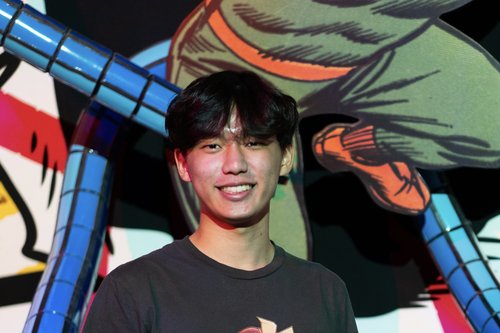
Connor LeeResearcher | Stanford E-Lab

Martand KarnikResearcher | USC Art.ificial
Our Survey
The main goal with our research was to explore the why behind behavior: the emotions and drivers that are key shapers of Gen Z's attitudes and actions. We wanted to look beyond surface-level metrics on usage and time spent, especially for a generation shaped by a uniquely turbulent cultural and technological moment.
With a human-centered, design-thinking approach, the Stanford Entertainment Lab and USC Art.ificial set out to explore Gen Z’s deeper feelings specifically about generative AI: how they want it to shape the content they consume and the stories they create.
To do this, we ran a survey with relatable, relevant questions—inspired by our own experiences— and distributed the survey across our schools.
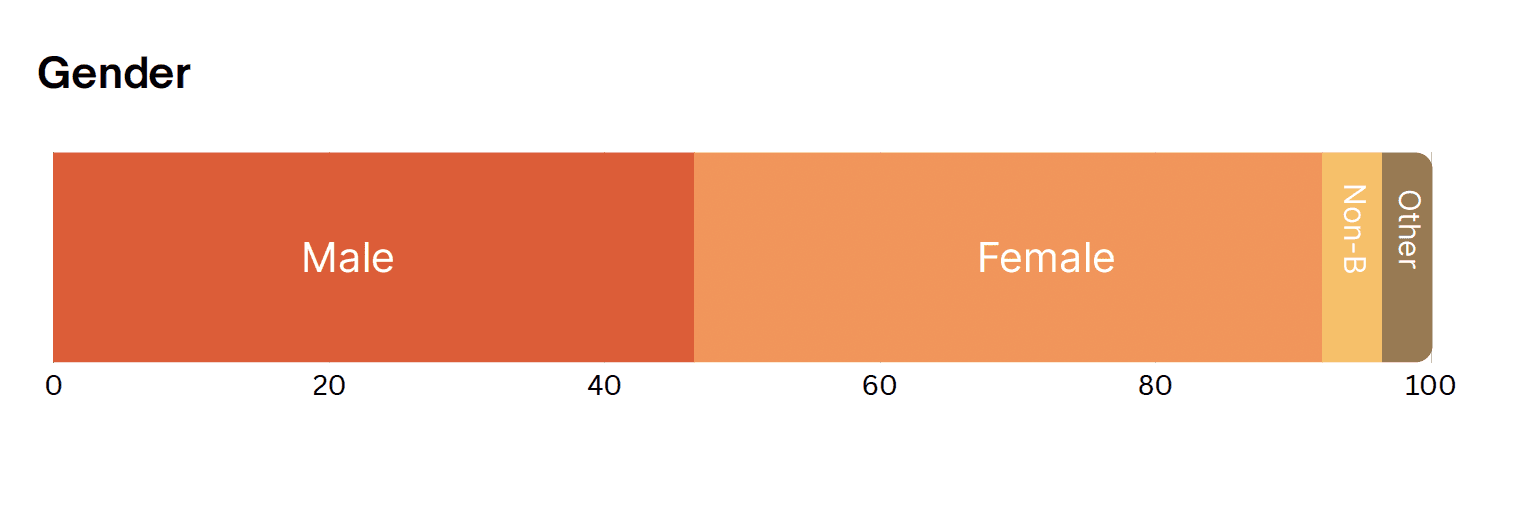
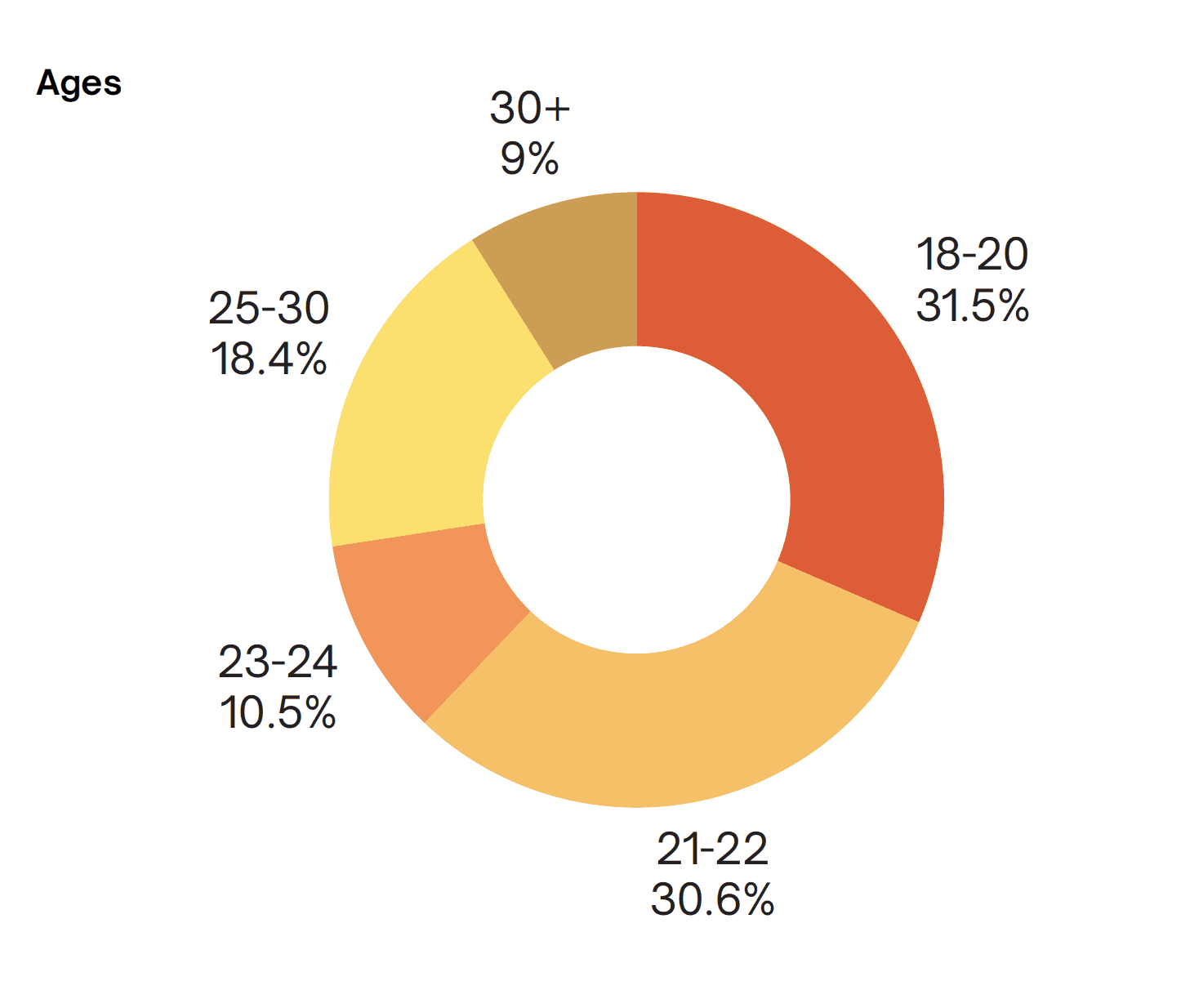
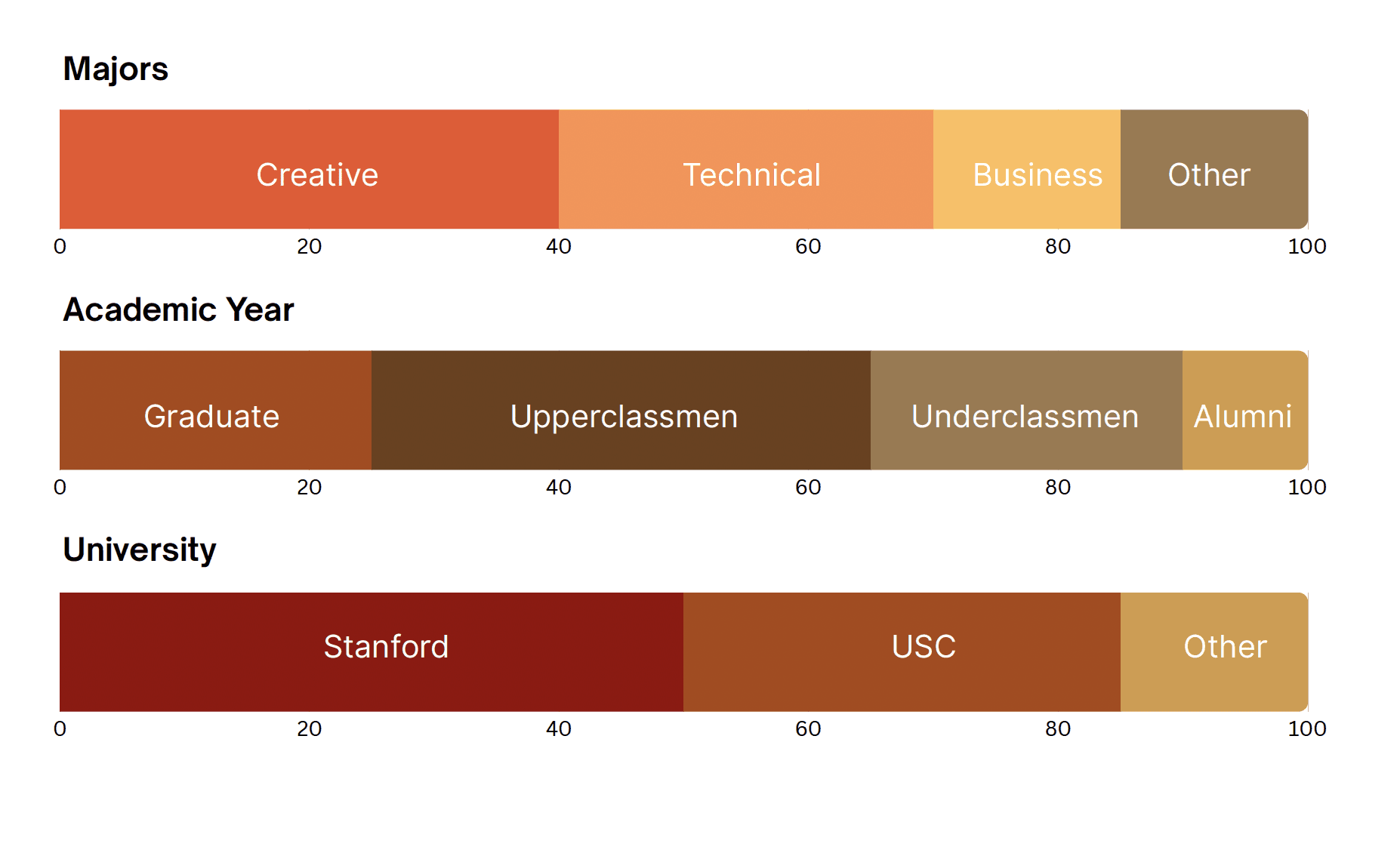
In March 2025, we heard from 114 students, mostly from Stanford and USC, spanning diverse majors and creative interests. While modest in size, the survey had consistent results from which we were able to discern clear, actionable insights into what Gen Z hopes the future of AI in entertainment can be.
10 Key Takeaways
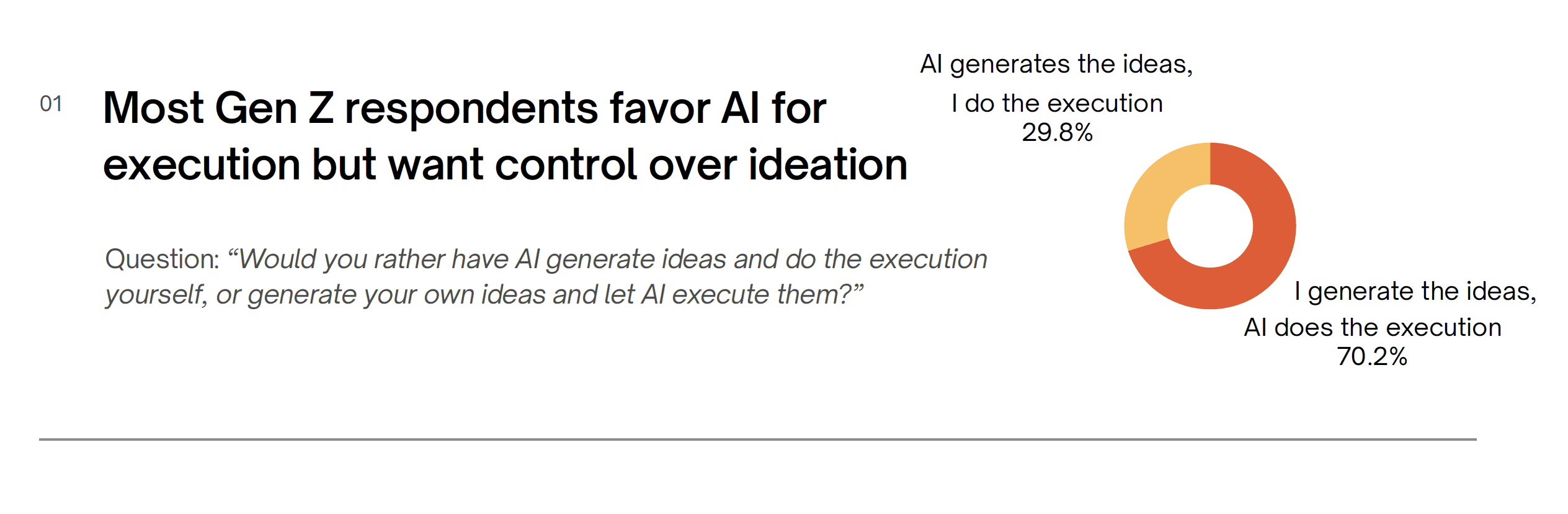
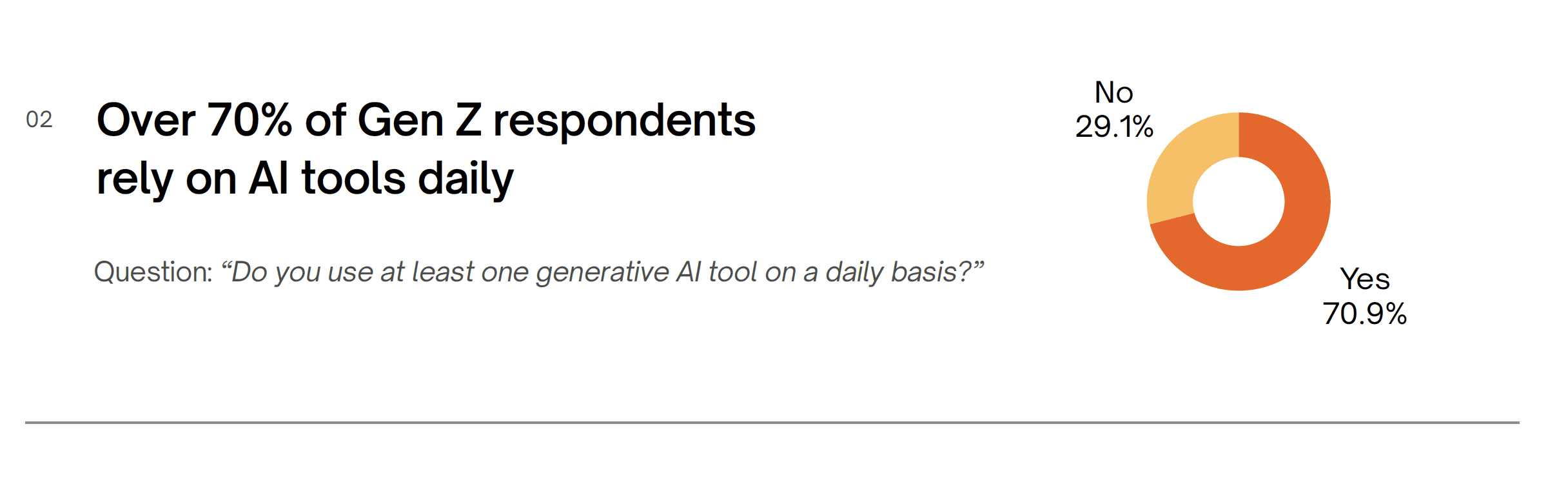
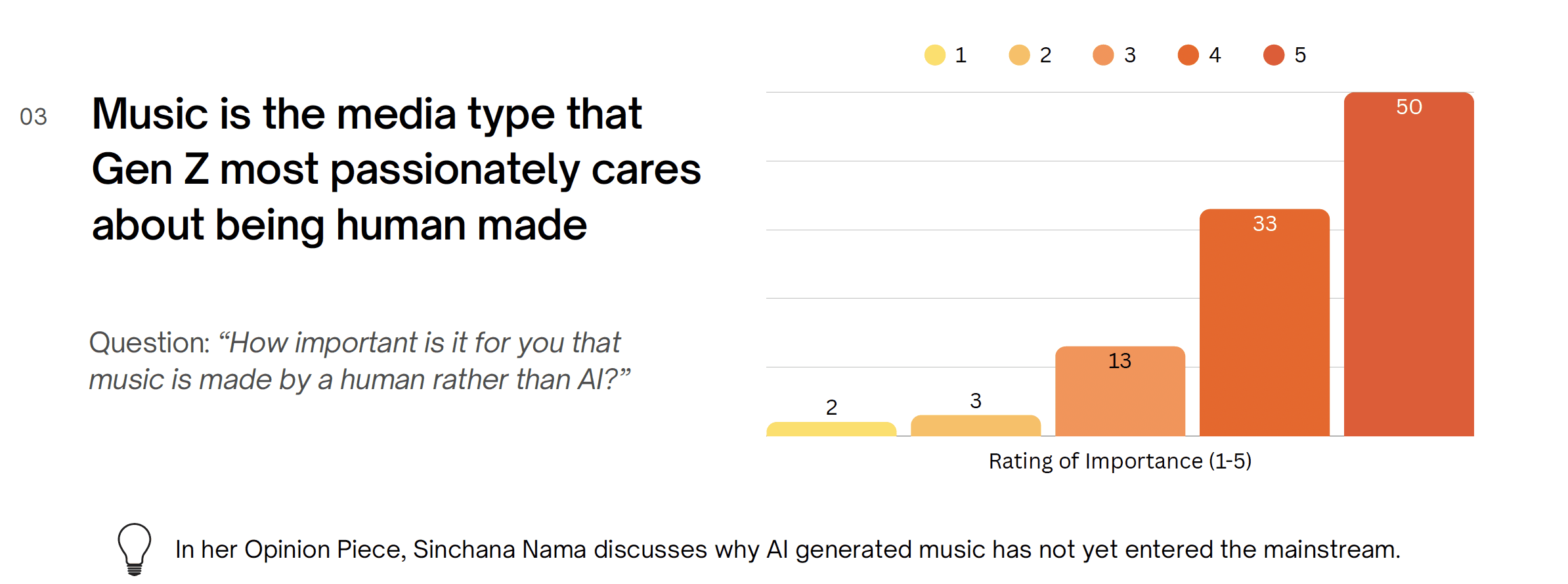

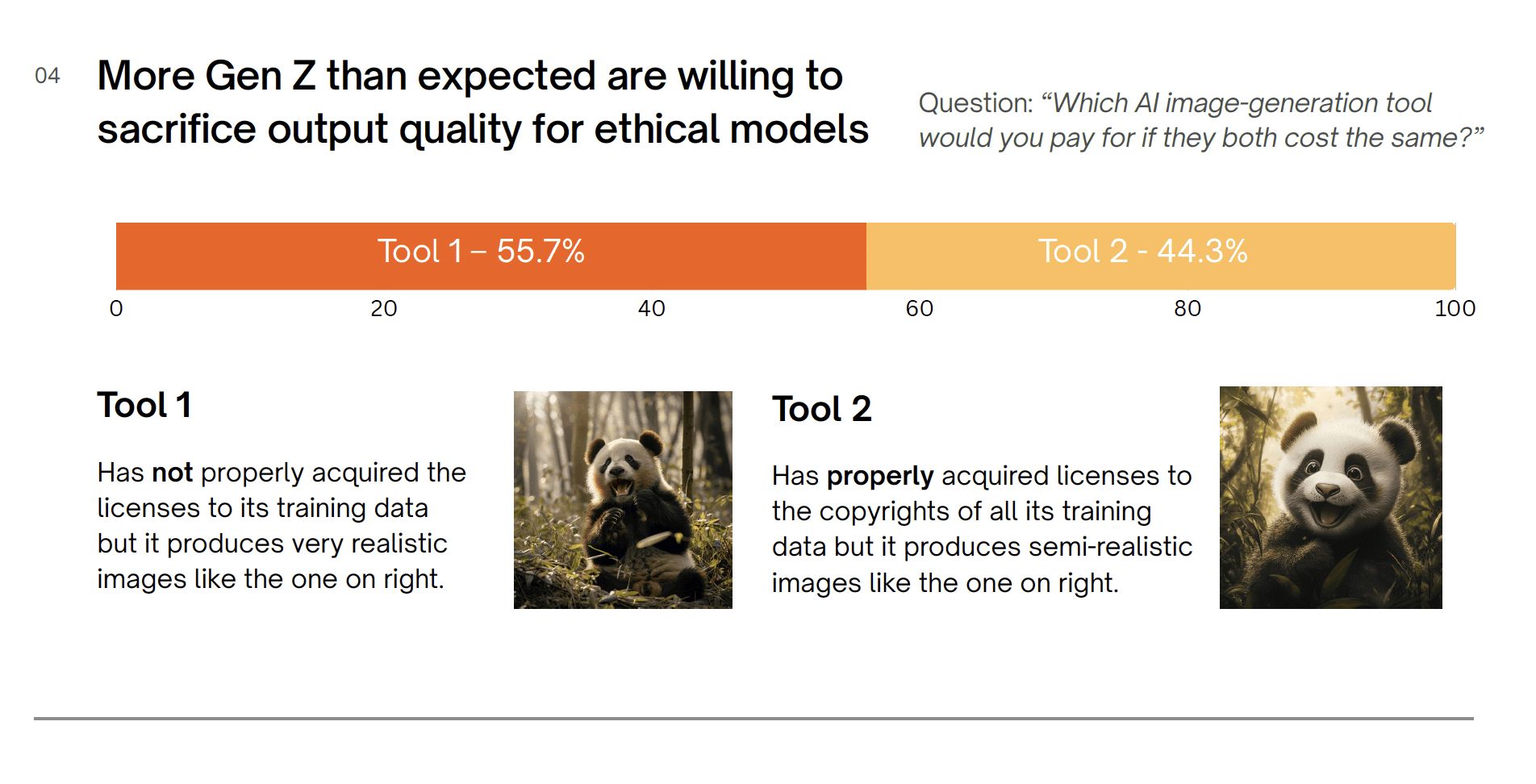
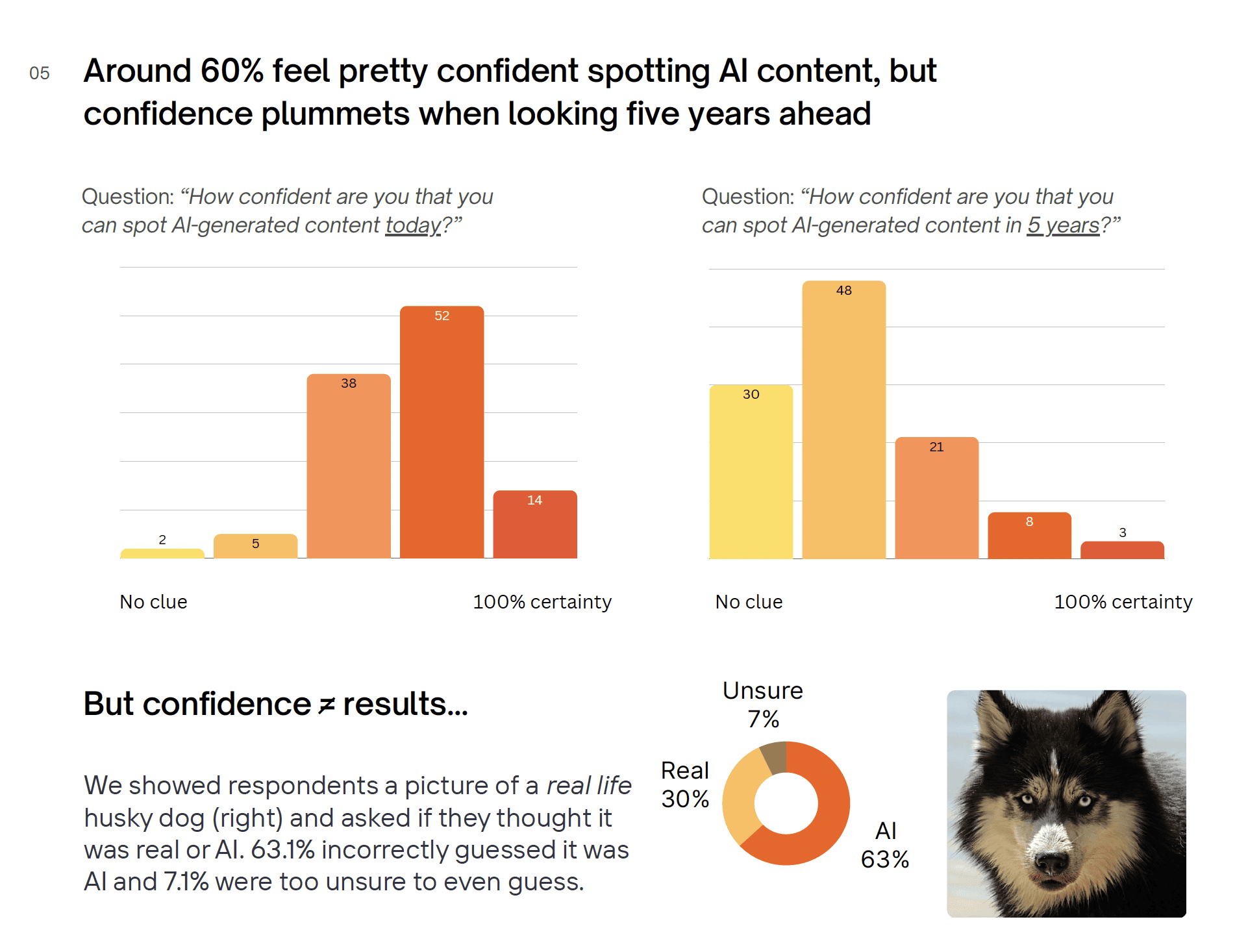

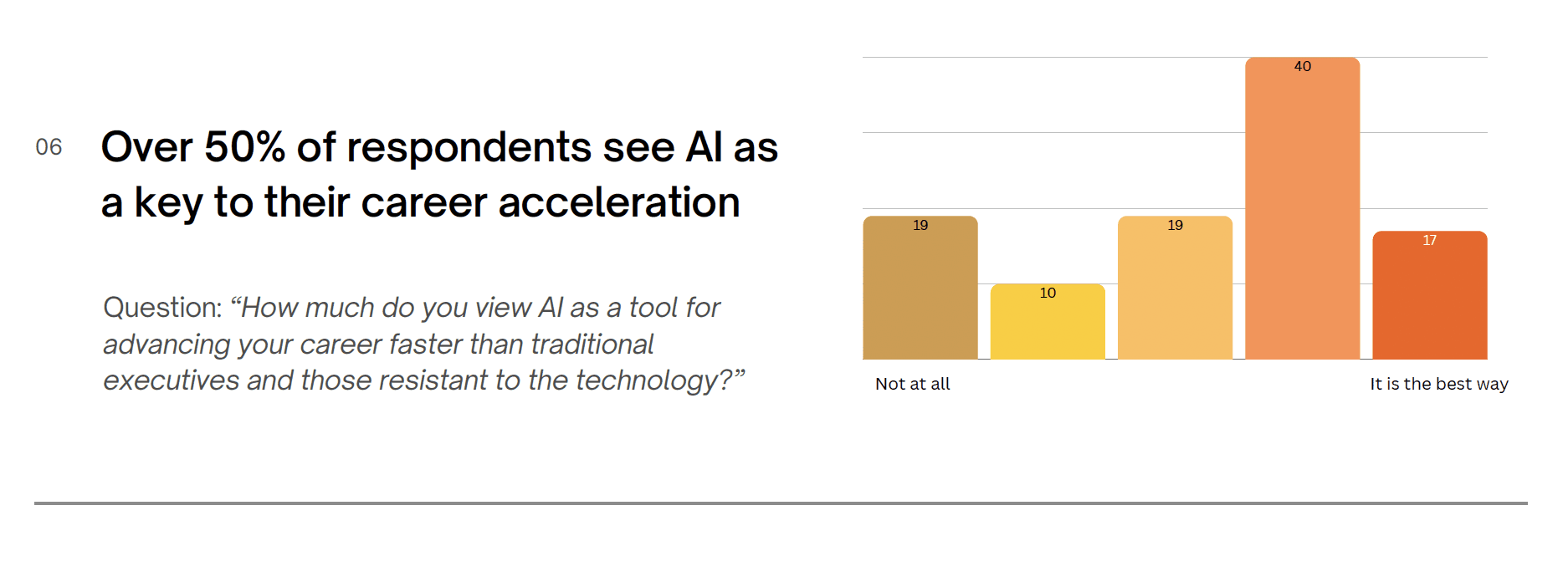
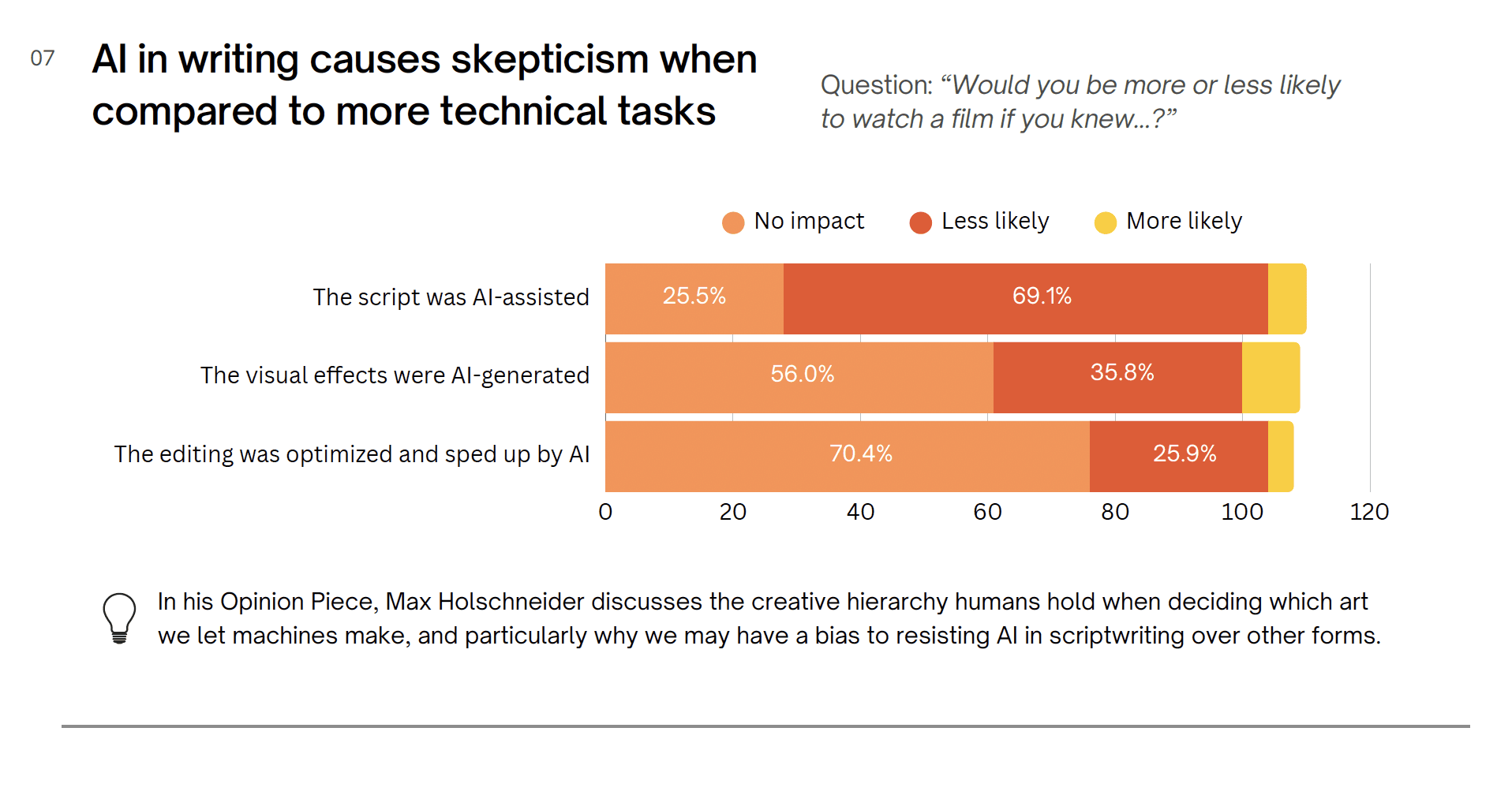
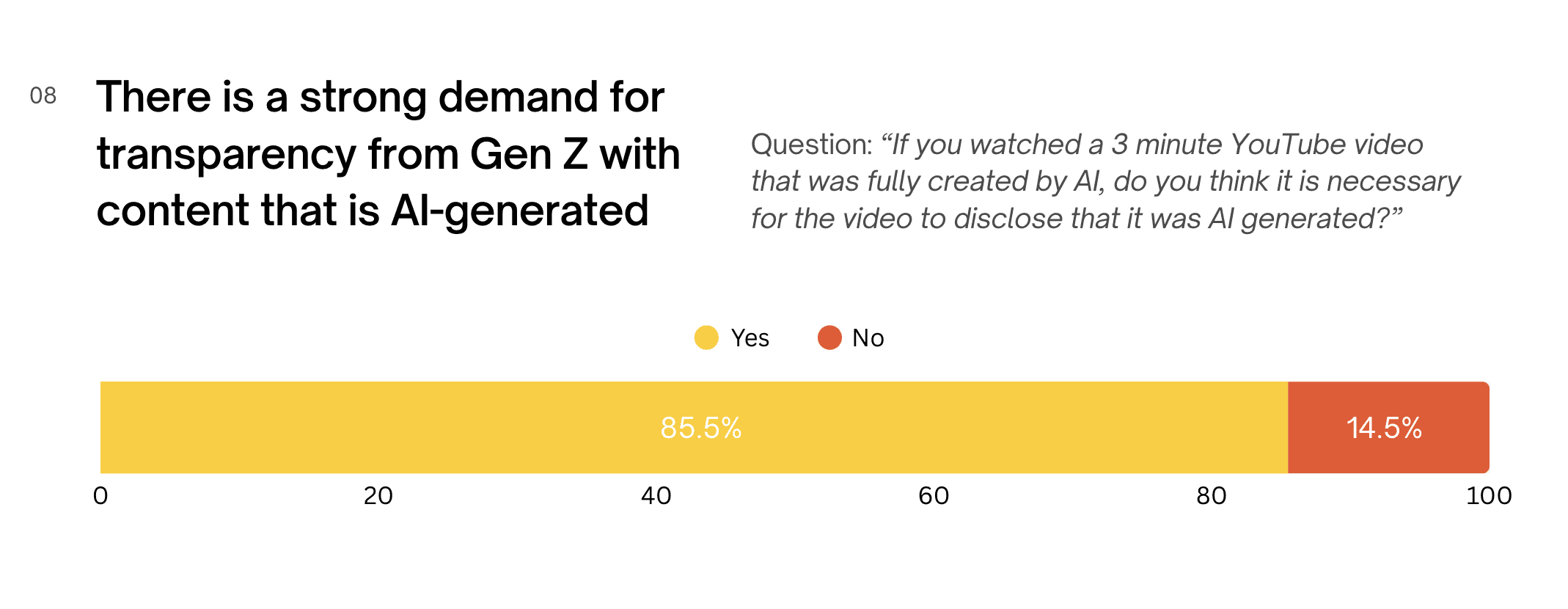
With more data, opinion pieces, interviews, and our team’s own analysis of results.