
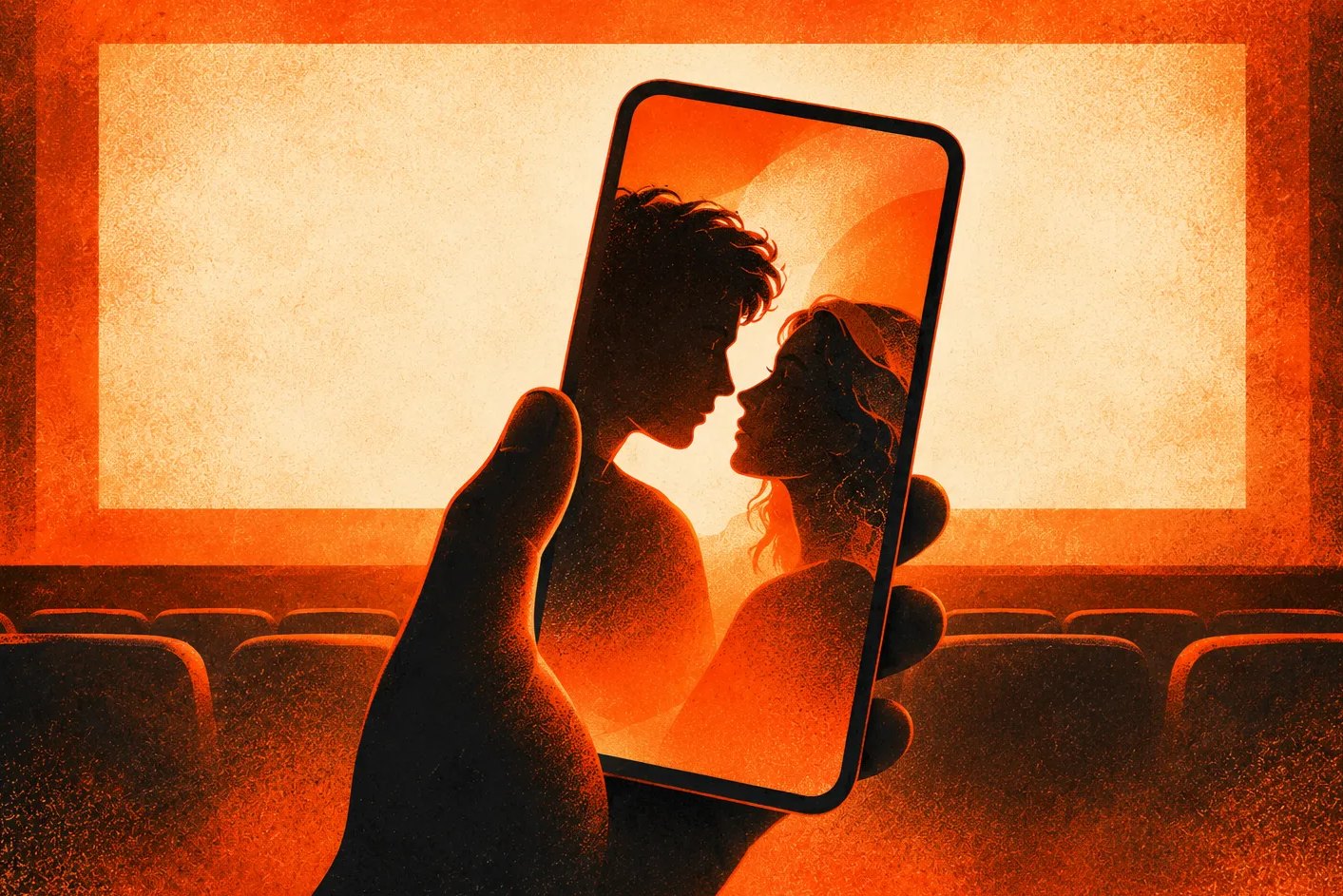
The romantic comedy—once a central fixture of the Hollywood storytelling ecosystem—no longer occupies the cultural prominence it enjoyed throughout the twentieth century. Yet public fascination with love as both narrative engine and emotional experience has not diminished. Instead, as Hollywood has redirected its creative and financial energies toward franchises, sequels, and cinematic universes , particularly those belonging to Gen Z, have turned elsewhere to satisfy their desire for emotional sincerity: TikTok edits, fanfiction communities, BookTok-driven romance publishing, and serialized television such as The Summer I Turned Pretty. This shift raises fundamental questions about the relationship between genre, industrial structures, and the evolving forms of intimacy shaping contemporary life. If romance continues to thrive in alternative media, why have traditional rom coms declined so sharply? And what does this migration reveal about the ways Gen Z idealizes, negotiates, and experiences love?
A Brief Timeline of the Romantic Comedy
Long before the rom com was a cinematic category, its conventions circulated across multiple cultural forms. Greek New Comedy established the blueprint: lovers separated by obstacles, comic misunderstandings, and climactic reunions. Shakespearean comedy later refined these tropes into sophisticated explorations of desire, social order, and linguistic play, cultivating audiences who recognized and anticipated generic patterns. Romantic narratives continued to evolve through eighteenth- and nineteenth-century literature, from Austen’s courtship plots to serialized Victorian fiction whose cliffhangers fostered proto-fandoms and communal reading cultures. Music similarly codified emotional scripts of longing and fulfillment, embedding romance in popular soundscapes.
Across these media, one constant persists: the romantic narrative has always been a site of intense audience investment. What changes is not the desire for romantic storytelling but the mechanisms through which publics engage it. The rise of cinema in the twentieth century consolidated these traditions into a recognizable genre—romantic comedy—whose appeal lay in its ability to synthesize humor, emotional recognition, and narrative closure.
From the mid-twentieth century through the 1970s, romantic comedies enjoyed considerable cultural prestige. Stars such as Katharine Hepburn, Cary Grant, and Audrey Hepburn anchored films that were both commercial successes and critical favorites. However, the emergence of New Hollywood, with its emphasis on auteurism and gritty realism, reframed romance as a feminized and therefore “less serious” genre. This shift marked the beginning of the rom com’s gradual marginalization.
Despite its declining critical stature, the rom com achieved unparalleled cultural dominance during the 1990s and early 2000s. Films such as When Harry Met Sally, Notting Hill, and 10 Things I Hate About You became classics not only because of charismatic performances and memorable dialogue, but because they successfully balanced emotional sincerity with aspirational fantasy. Their settings—bookshops, journalism offices, picturesque cities—blended realism with idealism, allowing viewers to project themselves into narratives structured around clear emotional stakes and satisfying resolutions.
These films remain culturally resonant because they offer a form of emotional intelligibility increasingly absent from contemporary life. Their continued relevance reflects not mere nostalgia but a sustained desire for depictions of romance that privilege intention, vulnerability, and coherent narrative form.
Industrial Reorientation and the Decline of Mid-Budget Film
The rom com’s disappearance is better explained by industrial than aesthetic factors. The collapse of the mid-budget film—the economic category to which most rom coms belonged—coincided with the rise of IP-driven franchises that monopolized studio investment. The transition to streaming further devalued theatrical romantic comedies, replacing star-driven vehicles with algorithmically generated content that disperses romantic subplots across hybrid genres rather than concentrating them within dedicated narratives. These structural forces, rather than audience disinterest, account for the genre’s diminished presence in mainstream film.
The Displacement of Romance: Audience Migration Beyond Traditional Media
As institutional support for rom coms declined, romance proliferated in fan-driven ecosystems. Platforms like Wattpad and Archive of Our Own host vast repositories of character-centered, emotionally explicit narratives that fulfill many of the functions romantic comedies once served. BookTok, meanwhile, has transformed romance publishing into the most commercially dominant literary genre, with titles such as The Love Hypothesis and It Ends With Us achieving mass popularity through decentralized, reader-led publicity.
TikTok edits and fan-made videos distill romantic narratives into affective fragments—slow-motion glances, musical cues, color palettes—suggesting that romance remains potent even when compressed into seconds-long digital artifacts. This shift reflects a broader transformation: romance has moved from being institutionally produced to being collectively generated, curated, and circulated.
Recent attempts to revive the genre (Set It Up, Anyone But You, To All the Boys I’ve Loved Before) highlight both persistent demand and uneven execution. Many such films struggle with the structural and character-driven coherence that once defined the genre. Nonetheless, their popularity indicates that audiences still seek romantic narratives in traditional forms—when they are adequately resourced and thoughtfully crafted.
Foreign media—particularly Korean and Chinese dramas—have become increasingly influential in this landscape. These dramas embrace emotional maximalism and narrative sincerity, filling a void left by Hollywood’s reluctance to center romance. Their global popularity underscores the continued viability of romance as a primary narrative genre rather than a subsidiary subplot.
Gen Z, Digital Intimacy, and the Revaluation of Romance
Gen Z’s romantic experiences are shaped by a technological environment characterized by algorithms and fleetingness. The central features of this landscape—dating apps, situationships, parasocial attachments, and online self-presentation—complicate traditional romantic expectations and generate new forms of longing. Older rom coms remain compelling not because Gen Z is nostalgic for a time they did not live through, but because these films depict forms of clarity, intentionality, and emotional articulation often absent from contemporary dating culture.
It is significant that romance media is most passionately consumed and circulated by young women, whose fandom practices—shipping, editing, reading, writing—constitute a powerful cultural force. Historically dismissed as trivial, female fandom now drives entire markets. The displacement of rom coms from cinema to participatory digital spaces thus reflects not audience disinterest, but the reorganization of cultural production around decentralized, user-driven modes of storytelling.
Genre Hybridization and Dispersal
Rather than disappearing, the rom com has been absorbed into other genres. Contemporary films frequently incorporate romance as a secondary thread within action, comedy, or drama, diluting the genre’s distinctiveness while maintaining its emotional functions. This hybridization suggests that romance remains narratively indispensable even as industrial priorities shift elsewhere.
The Summer I Turned Pretty exemplifies the resurgence of communal engagement with romantic storytelling. Its adaptation from a popular book series created a cross-platform fandom, while its serialized format offered the narrative depth once supplied by feature-length rom coms. The series’ cultural impact demonstrates that audiences still respond to romance as an event when given the opportunity.
Reality dating shows such as Love Island and The Bachelor produce romance through high-stakes social experimentation rather than scripted narrative. Their appeal lies in their capacity to stage relational uncertainty in real time, offering audiences an illusion of proximity to authentic emotional experience. These programs function as contemporary communal rituals that replicate, in altered form, the collective experience once associated with theatrical rom coms.
We inhabit a culture saturated with romance—endless shipping discourse, aestheticized longing on TikTok, and thriving romance publishing—yet paradoxically lacking robust romantic storytelling in mainstream film. The decline of the rom com in traditional media is not a reflection of diminished audience desire but of industrial restructuring and cultural revaluation. Gen Z continues to seek intimacy, coherence, and emotional sincerity; it simply locates these qualities in alternative media ecosystems.
If contemporary audiences still long for “good rom coms,” it is because such narratives offer more than escapism: they provide frameworks for understanding connection in an era defined by fragmentation, and uncertainty. Romance sells; the question is whether the institutions that once cultivated it will recognize, once again, the cultural and economic value of telling love stories with genuine belief in the genre’s significance.