Introduction
The exploding visibility of young voices in film within the last decade calls for an exciting new future of stories. What has evolved into an endless melting pot of perspectives about the human condition—told in genre-bending modes of narration, boundless creative layers, and perfectly imperfect technicalities—have never before been closer to industrial and mainstream media demands. What is causing this dramatic upturn in youth filmmaking, and how might the industry best adapt to the growing demand (and overflowing supply) of these emerging talents?
So, Why Make Movies?
“I guess we're in a critical period where we're forming our identities and trying to get a better understanding of the world. A lot of teenagers use film as a way to do that,” answers Cynthia Yeh, a high school senior in Canyon Crest Academy’s after-school Envision Cinema Conservatory filmmaking program.
“I think being a filmmaker and making films has really opened my eyes,” says Riley Walsh, a US Presidential Scholar of the Arts and a first-year film major at Savannah College of Art and Design, “just being aware of every little thing and how every little thing impacts my life has brought me a lot more emotional awareness and, you know, understanding of myself.” On a similar topic of emotional awareness, Santiago Salazar, a 19-year-old award-winning filmmaker and musician from Florida (says): “For me, my work is, it's really the validation of my feelings…without my work and without my film and all that stuff, it would be hard for me to differentiate what I'm actually feeling at a moment in my life…it makes my feeling real and that's why I make movies.”
Reflect on your youth experience—do you still remember the overstimulation of change and uncertainty? Give today’s teenager a camera and a microphone. Show them how to use it, to see and hear the world the way they see and hear it. A beat he felt after his first kiss last week. A line of dialogue she would hear her late father recite. A moment where the music was loud.
Today’s youth are finding more reasons to shine the spotlight on themselves, entering their insights into top film festivals and independent online platforms, with stories that come from the heart—not merely the mind.
As Walsh powerfully explains it: “I think everyone has their own story to tell and everyone has something to say. I learned that through documentary filmmaking…literally everyone is a storyteller.”
So why now more than ever before?
Age of Accessibility
“In an age where technology is allowing us to tell stories easier and easier, people are becoming more open to talking about topics that weren't previously so easy to talk about. We are becoming more aware of topics and things that we have not in the past,” states Walsh.
From the advent of “iPhone filmmaking” to the proliferation of YouTube short film culture, the concept of youth creating films has never been less uncommon.
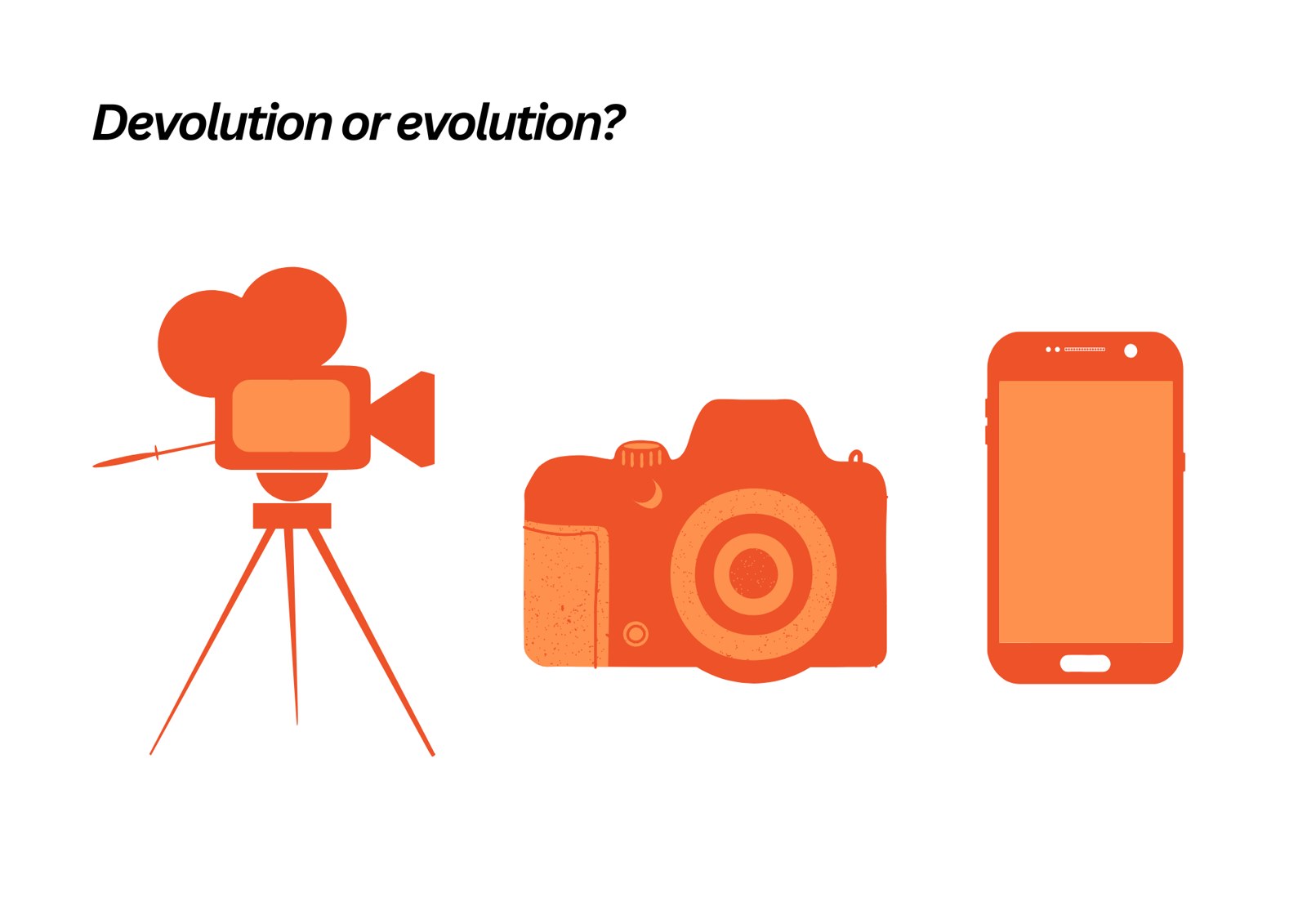
The fall of the systemic barrier to tell stories has also led the stories themselves to flourish: “Because [filmmaking is] more accessible, we have much more capacity to experiment and fail. We get to spend more time experimenting with ourselves and learning ourselves better,” Salazar explains. Typing in “student short films” on YouTube gives consumers endless access to experimental takes on mental health, crime thrillers in LEGO stop-motion, or documentaries about love recorded on phone call conversations.
Accessibility also comes in the form of platforms. In recent decades, student film festival programs and participation counts in them have shot up. Industry grade film festivals have already begun to implement “youth programs”: SFFILM’s Youth Works in 1991; Chicago International Film Festival’s CineYouth in 2005. Independent “student-only” film festivals are emerging: NFFTY (National Film Festival for Talented Youth) in 2007 and All American High School Film Festival in 2013.
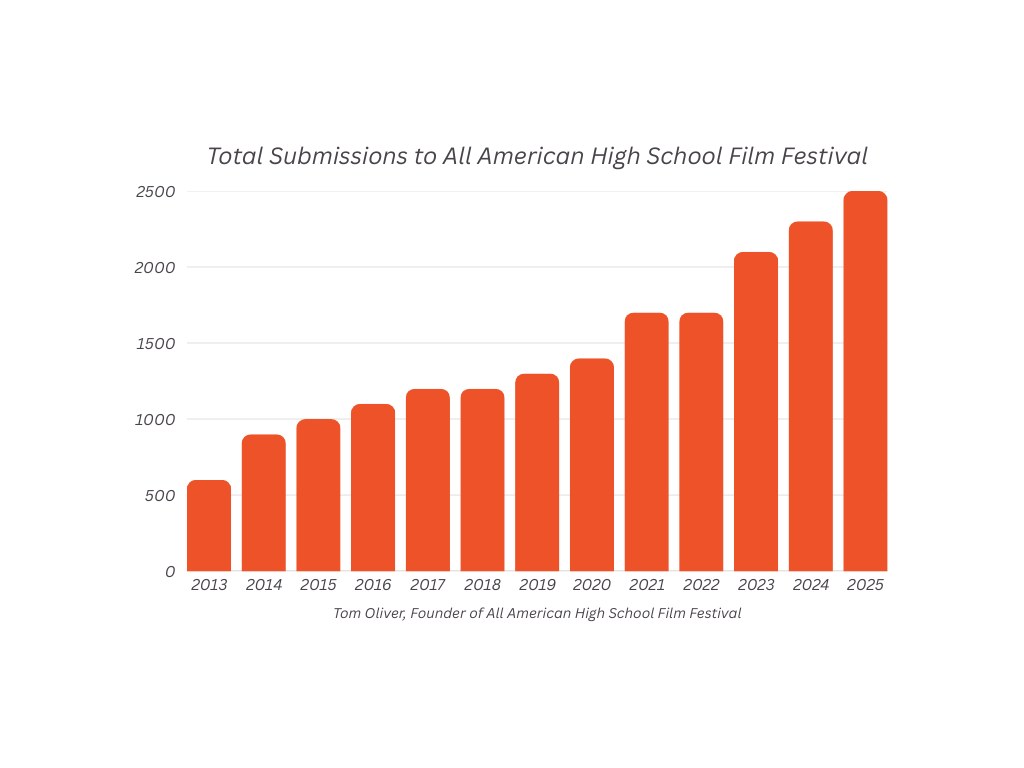
The motivations for film organizations to uplift the youth seem unsurprisingly altruistic. “Our motivation is to showcase the future of film on a grand stage and to provide immersive education with a profound impact,” explains Tom Oliva, founder and director of the All American High School Film Festival (which has risen to Oscars-equivalent relevancy for the high-school filmmaker), “we certainly hope that our festival provides opportunities and resources that help students prepare for and ultimately pursue careers in the industry.”
Even for-profit companies are launching professional fellowships for young filmmakers to tie them directly to industry exposure and resources, such as Adobe & Sundance’s Ignite Fellowship in 2015 and Indeed’s Rising Voices fellowship in 2020. These programs are growing to encourage young people to create more, granting filmmakers exciting opportunities to have their voices shine on silver screens.
Youth Visibility in the New Industry
“I think that now more than ever, we are being seen. We are definitely entering a new age,” claims Salazar, “where your credentials don’t matter if you've made big things. The new age is that if you can make something and it resonates with people, no matter how large of a budget, that is getting more prioritized in today's media.”
And what’s being “prioritized” in media directly affects what Hollywood selects to play on screen. 19-year-old Kane Parsons’s upcoming A24 “Backrooms” film, slated for a 2026 release, traces back to a homemade 3D-rendered video he published online in 2022 which quickly became an internet sensation. Even 21-year-old Wesley Wang’s controversial YouTube short “nothing, except everything” broke headlines for landing a feature-length adaptation deal with Darren Aronofsky.
Authentic stories about the youth experience are spreading over silver screens as younger and younger directors slam Sundance victories with relatable tales. Take Sean Wang, 22 when he began writing DìDi (2024), who captured Gen-Z and young Millennials’ hearts with his careful depiction of a 13-year-old Chinese boy’s carefree recklessness, emotional familial struggle, and a touch of profane humor.
Salazar concludes, “I think the biggest thing that's lacking in the industry is youthful, young work in new media. Historically, it's been very hard to find movies that people our age can connect to. But now that this gap has become much shorter, now audiences and people our age actually get to consume art that is so personal to them.”
The Best Next Steps
But visibility in new media can be a double-edged sword. The infinite publication cycle of online platforms like YouTube and Vimeo can backfire and crowd out content accessibility. This densifying market of online shorts can spur creators into a race to the bottom effect with the stories they choose to tell where clickability starts to replace quality. “There's definitely more of a popularity among clickable films and more films that are, you know, I've heard the term the ‘TikTok-ification of cinema’ being thrown around,” observes Walsh, which doesn’t do much to help the “common sentiment in young filmmakers who really pour their heart and soul out into projects, and then it just doesn't get seen.”
Perhaps, then, the goal of young filmmakers is not to be seen, nor “Tik-tokify” their artistry in hopes of striking gold on virality. Raising again the point of the why of youth filmmaking: the push to create and the pull to share that overwhelms all inherent limits to amateur filmmaking is a deep internal force that doesn’t require validation to be valuable.
As Walsh elegantly concludes: “I feel like it can be a crushing thing, but I also feel like we don't make films for people to see. We make films for ourselves to express how we feel. And if people see it and connect with it, that's the cherry on top.”
And on the opposite end of the youth-industry gap, perhaps Hollywood ought to begin looking closer in places the masses pay little attention to. Many if not most fantastic student short films I’ve seen have thrived shortly and died within the festival cycle, attracting little to no visibility on public media platforms. Perhaps more industrial presence within contained youth communities and a greater professional awareness of the outstanding yet underseen may propel important stories to rise above the haystack of media sensation and receive their deserved viewership, if not common empathy.
Conclusion
A surface level economist would skim the industrial shift in film and conclude a rise in the supply and demand of youthful stories. Yet, neither the supply nor demand for youthful stories have truly, intrinsically changed. There are only shifting third and fourth variables: the accessibility for storytellers to tell stories and the visibility for people to consume them.
The future of film is officially in the hands of youth. We are the inevitable wave that gets to decide what stories to tell and what stories we want to hear, and we have already begun speaking for the small and silver screens.
In my conversation with Yeh, she kept bringing up how the world could benefit from more films with the “youthful energy.” When I asked her what she meant, she delicately replied: “It’s something that everyone has within them, something that accumulates from all of their experiences, their background, and all the things unique about them…to help them fuel stories from their life in a personal and vulnerable way.”